
Ocala's Thanksgiving Fire of 1883: The Blaze That Forged 'The Brick City' |
A devastating fire reshapes Ocala's downtown and leads to a resilient rebirth |
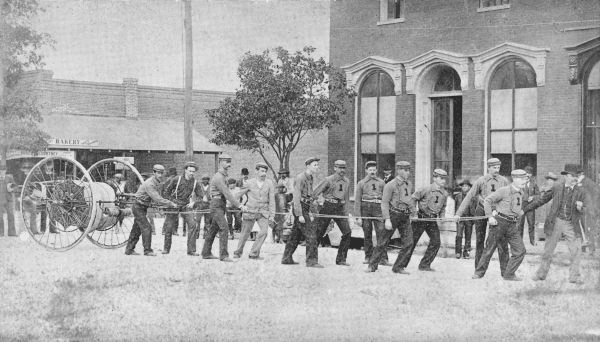
On November 29, 1883, a catastrophic fire erupted in downtown Ocala, forever altering the city's landscape and identity.
The blaze ignited atop Benjamin & Company, a two-story wooden store at the southeast corner of Main Street and Ocklawaha Avenue.
Despite immediate efforts by bucket brigades, the fire rapidly consumed adjacent structures, including Snowden's Drugstore and the Ocala House Hotel.
Flames engulfed all buildings on the east side of Main Street between Broadway and Fort King Avenue, then leapt westward, devastating two additional blocks to Orange Street.
In total, approximately ten stores were destroyed, leaving four blocks of the business district in ruins.
Notable losses included the office of the former Ocala Banner newspaper and the residence of its editor.
The fire also obliterated the Palace Hotel, Dr. Thomas Gary's home, James H. Whitfield's boarding house, and a moss processing mill.
All structures on the east side of SE 1st Avenue from Silver Springs Boulevard to Fort King Street were reduced to ashes.
Estimated damages reached approximately $350,000, equivalent to nearly $11 million today.
Beyond the physical destruction, invaluable records and newspaper archives chronicling Ocala and Marion County's early history were lost.
In the aftermath, the community demonstrated remarkable resilience.
Reconstruction commenced almost immediately, with wooden buildings replaced by structures made of brick, granite, and metal.
This shift not only enhanced fire resistance but also led to Ocala's enduring nickname: 'The Brick City.'
By 1884, the city had erected a new courthouse and a grand three-story Ocala House of red brick featuring a prominent tower.
The following year saw the construction of the city's first two bank buildings and the three-story Marion Opera House at the southwest corner of Main and Broadway Streets.
These developments solidified Ocala's status as a prosperous trade center.
Within five years, the town boasted numerous wholesale warehouses and over 25 retail establishments.
The fire also spurred the establishment of Ocala's official fire department.
Within weeks, the city issued $2,500 in fire bonds to fund the department.
On May 20, 1885, the Ocala City Council passed an ordinance creating the Fire Department of the City of Ocala.
Volunteer firemen were integrated into newly formed companies: Marion Steam Fire Engine Company No. 1 and Ocala Hook & Ladder Company No. 1, led by the city's first fire chief, William Fox.
Today, the legacy of the 1883 fire is preserved at the Ocala Fire Museum, located at 3001 NE 21st Street.
The museum offers a self-guided tour through the department's history and is open to the public Monday through Friday, 8 AM to 5 PM.
Admission is free, inviting visitors to explore the events that shaped Ocala's resilience and transformation into 'The Brick City.' |
0 Comments
Join the conversation
Be the first to comment
Share your thoughts above.